Nano-scale Micro-inlay: 0.5mm Gemstone Automatic Array

Aug 19, 2025 By

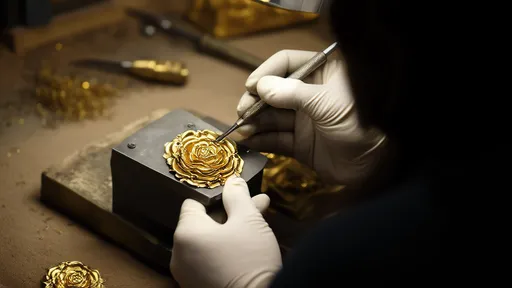
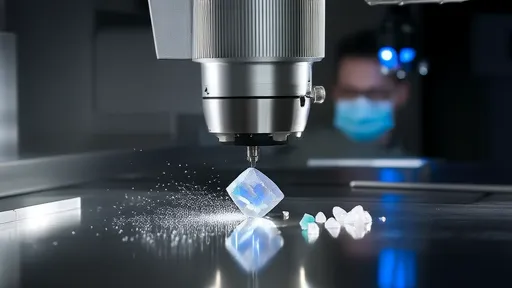
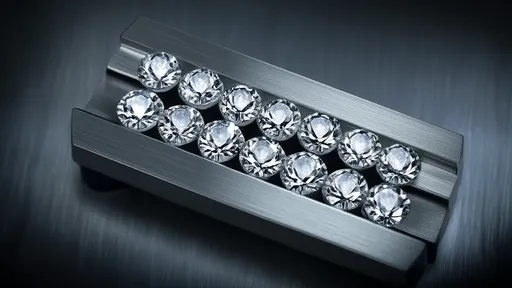
The world of jewelry manufacturing is witnessing a revolutionary transformation with the advent of nanometer-scale micro-setting technology. This cutting-edge technique enables the precise arrangement of gemstones as small as 0.5mm in diameter, creating breathtaking patterns and designs that were once considered impossible. The marriage of nanotechnology and traditional craftsmanship has opened new frontiers in luxury adornment, challenging the limits of human dexterity and artistic expression.

At the heart of this innovation lies the automated array system that positions microscopic gemstones with atomic-level precision. Unlike conventional setting methods that rely heavily on manual labor, this advanced technology utilizes computer-controlled robotics guided by high-resolution imaging systems. The result is a flawless alignment of stones that creates shimmering surfaces with perfect symmetry, transforming jewelry into miniature works of architectural brilliance.

The process begins with specially engineered nanoscale drill bits that create microscopic cavities in the metal base. These receptacles are designed to hold each gemstone at optimal angles for maximum light reflection. What makes this technology truly remarkable is its ability to compensate for the natural variations in stone size and shape - a critical factor when working with such minute components. The system automatically adjusts each setting to ensure uniform appearance despite microscopic differences between individual stones.

Design possibilities have expanded exponentially with this technology. Jewelers can now create gradient color effects using thousands of differently hued stones, or produce photorealistic images through strategic stone placement. The density of stones achievable through automated micro-setting far surpasses what human hands could accomplish, allowing for unprecedented light play and visual depth. Some avant-garde pieces contain over 10,000 individually set stones in a single square centimeter.

Material science has played an equally important role in this advancement. New alloy formulations provide the necessary strength to maintain structural integrity despite the perforated nature of extensively micro-set pieces. The metal matrix must withstand daily wear while preserving the precise geometry of each setting - a challenge that has led to innovative metallurgical solutions combining precious metals with nano-reinforcements.

Quality control in nanometer-scale micro-setting represents another technological marvel. Automated inspection systems utilizing machine vision algorithms scan finished pieces at magnifications exceeding 500x, detecting any imperfections in stone alignment or setting security. This level of scrutiny ensures that each piece meets exacting standards before leaving the workshop, maintaining consistency across production runs.

The impact on jewelry design aesthetics has been profound. Designers now work with digital modeling software that simulates light interaction across micro-set surfaces, allowing them to preview visual effects before physical production begins. This digital workflow has given rise to entirely new design languages in jewelry, with patterns that play with optical illusions and light diffraction at microscopic scales.

From a manufacturing perspective, the technology has redefined production timelines. What once required weeks of painstaking handwork can now be accomplished in hours with superior precision. However, this doesn't eliminate the artisan's role but rather transforms it. Master jewelers now oversee the creative process at a higher level, programming intricate patterns and making artistic decisions about stone selection and arrangement that the automated systems then execute.

The commercial implications are equally significant. Micro-set jewelry commands premium pricing due to its technical sophistication and visual impact. Consumers increasingly seek out these pieces as wearable technology that represents the pinnacle of human craftsmanship enhanced by cutting-edge engineering. The market has responded with growing demand for these miniature masterpieces across all jewelry categories from watches to statement necklaces.

Looking ahead, the technology continues to evolve. Researchers are working on even smaller scale applications that could see gemstones measuring just 0.2mm being automatically set. Other developments focus on creating dynamic micro-set surfaces where stones can move or change position, adding kinetic elements to jewelry design. As the boundaries of what's possible continue to expand, one thing remains certain: nanometer-scale micro-setting has permanently altered the landscape of fine jewelry manufacturing.

For collectors and connoisseurs, these advancements represent an exciting new chapter in jewelry history. The pieces created through this technology will likely become the heirlooms of tomorrow, cherished not only for their beauty but as representations of a technological revolution in an ancient craft. As the technology becomes more widespread, we can expect to see its influence spread across all price points, making the magic of micro-setting accessible to broader audiences while maintaining its aura of exclusivity and innovation.
Recommend Posts
Jewelry

Precious Metal Powder Injection Molding (MIM): Revolution in Mass Production of Complex Structural Parts

By /Aug 27, 2025

The manufacturing landscape is witnessing a quiet yet profound revolution, one that is reshaping how industries conceive and produce complex metal components. At the heart of this transformation lies Metal Injection Molding (MIM), a sophisticated powder metallurgy process that is rapidly becoming the go-to solution for the high-volume production of intricate, high-performance parts. This technology, often described as a hybrid between plastic injection molding and conventional powder metallurgy, is unlocking design freedoms and economic efficiencies previously thought unattainable for mass-produced metal items.
Jewelry

Italian Hand-engraving: New Standards for Buccellati Apprentice Assessment

By /Aug 19, 2025

The world of Italian jewelry craftsmanship has always been synonymous with excellence, and few names carry as much weight as Buccellati. Renowned for its intricate hand-engraving techniques and timeless designs, the Milanese maison has long set the gold standard for artisanal jewelry. Now, Buccellati has introduced a new set of apprenticeship evaluation criteria, reshaping how the next generation of master engravers will be trained and assessed.
Jewelry

Ancient Goldsmith Techniques: Nano-scale Wear-resistant Coating

By /Aug 19, 2025

The world of fine jewelry has always been a realm where tradition meets innovation. Among the most fascinating developments in recent years is the marriage of ancient gold craftsmanship with cutting-edge nanotechnology, particularly in the realm of wear-resistant coatings. This fusion has given rise to a new generation of jewelry that honors the past while embracing the durability demands of modern life.
Jewelry

Geometric Ferris Wheel: The Perfect Encounter Law of Circular Trajectories"

By /Aug 27, 2025

In the heart of every bustling amusement park, the Ferris wheel stands as an iconic testament to both engineering prowess and geometric elegance. Its circular trajectory, often perceived as a simple loop, conceals a world of mathematical beauty and physical harmony. The so-called "Perfect Encounter Law" of circular motion in Ferris wheels is not merely a whimsical concept but a profound intersection of geometry, physics, and human experience. This principle governs the synchronized movement of gondolas, the timing of passenger interactions, and the very rhythm of the wheel's rotation, creating moments of fleeting connection against the backdrop of a perfect circle.
Jewelry

Modular Design: Verification of Magnetic Buckle Load Capacity ≥ 5ct

By /Aug 19, 2025

The world of modular design continues to push boundaries, and one of the most critical aspects being tested is the magnetic snap mechanism's load-bearing capacity. Recent advancements have set a new benchmark, with magnetic snap fasteners now capable of supporting weights of 5 carats (ct) or more. This development is not just a technical achievement but a transformative step for industries relying on secure, yet detachable, components.
Jewelry

The Evolution of Sandblasting and Mirror Surface Mosaic Craftsmanship in 2025 Gold Jewelry

By /Aug 19, 2025

The jewelry industry is undergoing a quiet revolution in surface finishing techniques, particularly in gold ornamentation. As we approach 2025, the interplay between matte and glossy surfaces has evolved beyond mere aesthetic choices into a sophisticated design language. This year's most compelling gold pieces demonstrate how craftsmen have elevated the humble contrast between sandblasted and mirror-polished finishes into something approaching high art.
Jewelry

Amber Authentication: Expansion of FTIR Spectral Library to 5,000 Entries

By /Aug 19, 2025

The field of amber identification has taken a significant leap forward with the expansion of the Fourier-transform infrared spectroscopy (FTIR) reference library to encompass 5,000 unique spectra. This milestone represents years of meticulous data collection, cross-verification, and collaboration between gemological laboratories, research institutions, and field experts. The enhanced spectral database now covers an unprecedented range of geographical sources, age variations, and treatment types, fundamentally altering how professionals authenticate and study this organic gemstone.
Jewelry

Lost Wax Casting: Optimizing the Plaster to Water Ratio of 1.3:1

By /Aug 19, 2025

The art of investment casting, particularly the lost-wax method, has been refined over centuries to achieve precision and detail in metalwork. Among the critical factors influencing the quality of the final cast is the preparation of the mold material, often plaster. Recent advancements and empirical studies have highlighted the importance of optimizing the water-to-plaster ratio, with a particular focus on the 1.3:1 mix as a potential benchmark for achieving superior results.
Jewelry

Carbon Fiber Business-Style Men's Bracelet

By /Aug 19, 2025

In the world of men's accessories, the wrist has become a canvas for both style and statement. Among the materials that have risen to prominence in recent years, carbon fiber stands out as a modern favorite—particularly in the realm of business-oriented men's bracelets. Its sleek, high-tech aesthetic and lightweight durability make it an ideal choice for professionals who want to blend sophistication with a touch of contemporary edge.
Jewelry

Diamond Spectrum: A New Database for Ultraviolet-Visible Light

By /Aug 19, 2025

The world of gemology and materials science has taken a significant leap forward with the introduction of a comprehensive ultraviolet-visible (UV-Vis) spectral database for diamonds. This groundbreaking resource, developed through years of meticulous research and collaboration among leading laboratories, promises to revolutionize the way diamonds are analyzed, authenticated, and utilized across multiple industries.
Jewelry

Gemstone Cutting: Verification of Water Jet Precision ±0.003mm

By /Aug 19, 2025

The world of gemstone cutting has long been a delicate dance between artistry and precision. Among the various techniques employed, waterjet cutting stands out as a particularly fascinating method, combining the raw power of water with the finesse required for gemstone work. Recent advancements in this technology have pushed the boundaries of what was once thought possible, achieving tolerances as tight as ±0.003mm – a figure that would make even the most seasoned jewelers raise their eyebrows.
Jewelry

Anti-Oxidation of Silver Jewelry: Palladium-Rhodium Alloy Electroplating Solution

By /Aug 19, 2025

In the world of fine jewelry, silver has always been a beloved metal for its lustrous shine and affordability. However, its tendency to tarnish over time has been a persistent challenge for both jewelers and wearers. Traditional rhodium plating has been the go-to solution for decades, but recent advancements in alloy technology have introduced a more robust alternative: palladium-rhodium electroplating. This innovative approach not only enhances the durability of silver jewelry but also offers superior resistance to oxidation, making it a game-changer in the industry.
Jewelry

AI-assisted Design: Algorithm Generates Millions of Original Patterns

By /Aug 27, 2025

In the ever-evolving landscape of design and technology, a groundbreaking development is reshaping how we conceive and create patterns. Artificial intelligence has stepped into the realm of artistic design, not as a mere tool but as a prolific co-creator, generating millions of original patterns with unprecedented speed and diversity. This fusion of computational power and creative expression is not just an incremental improvement; it represents a paradigm shift in the design industry, challenging traditional methods and opening up new possibilities for innovation and customization.
Jewelry

Micro-Engraving Tool: 0.08mm Diamond Carving Knife Review

By /Aug 19, 2025

In the world of precision engraving and micro-carving, the choice of tools can make or break an artist's work. Among the most specialized instruments available today is the 0.08mm diamond engraving needle, a tool so fine it borders on the microscopic. This ultra-thin diamond-tipped cutter has gained a cult following among master engravers, miniature sculptors, and even semiconductor technicians who require sub-millimeter accuracy in their work.
Jewelry

The Ultimate Challenge of Color Stability in High-Temperature Enamel (Grand Feu)

By /Aug 27, 2025

In the rarefied world of fine art and horology, few techniques command as much respect and mystique as Grand Feu enameling. This ancient art, whose name translates to "Great Fire" from French, represents the pinnacle of enamel work, distinguished by its extraordinary durability and sublime beauty. The process involves fusing powdered glass to metal through successive firings in a kiln at temperatures exceeding 800 degrees Celsius. The resulting surface is not merely a layer of color but a metamorphosed, glass-like finish that is virtually impervious to fading, scratching, and the ravages of time. It is a testament to human ingenuity and patience, a dance with elemental forces that few artisans dare to master.
Jewelry

Advanced Titanium Metal Anode Oxidation: Precise Voltage Control for Gradient Rainbow Generation

By /Aug 27, 2025

In the realm of material science and surface engineering, titanium stands out for its unique combination of strength, lightness, and biocompatibility. Among its most captivating properties is the ability to develop vibrant, iridescent colors through anodization—a process that has fascinated engineers, artists, and designers alike. While basic anodization techniques have been widely documented, recent advancements have pushed the boundaries of precision, enabling the creation of stunning gradient iridescence through meticulous voltage control. This breakthrough not only enhances aesthetic applications but also opens new doors for functional uses in industries ranging from aerospace to medical devices.
Jewelry

Nano-scale Micro-inlay: 0.5mm Gemstone Automatic Array

By /Aug 19, 2025

The world of jewelry manufacturing is witnessing a revolutionary transformation with the advent of nanometer-scale micro-setting technology. This cutting-edge technique enables the precise arrangement of gemstones as small as 0.5mm in diameter, creating breathtaking patterns and designs that were once considered impossible. The marriage of nanotechnology and traditional craftsmanship has opened new frontiers in luxury adornment, challenging the limits of human dexterity and artistic expression.
Jewelry

Secret Inlay: Third-Generation Orbit Load-Bearing System"

By /Aug 19, 2025

In an era where space infrastructure is becoming increasingly critical to global communications, navigation, and security, a new paradigm has emerged in satellite architecture. The Third-Generation Orbital Load-Bearing System (3G-OLBS), with its revolutionary covert embedment technology, is redefining how payloads are integrated into spacecraft structures. Unlike traditional bolt-on modules that compromise aerodynamics and radar signatures, this system weaves critical components directly into the satellite’s skeletal framework.
Jewelry

The Revival of Micro Mosaic Art: Thousands of Tiny Glass Pieces Assemble Famous Paintings

By /Aug 27, 2025

In the hushed halls of art conservation studios and the vibrant workshops of contemporary artisans, a quiet revolution is taking place. The ancient and extraordinarily painstaking art of micro-mosaic, a technique once thought to be nearly extinct, is experiencing a profound and beautiful renaissance. This is not merely a revival of old methods; it is a reclamation of a heritage, a fusion of historical reverence with modern innovation, allowing artists to recreate iconic masterpieces with tens of thousands of slivers of colored glass, each piece a testament to human patience and vision.
Jewelry

Pearl Inspection: μ-CT 3D Imaging Technology

By /Aug 19, 2025

The world of pearl authentication has entered a revolutionary phase with the advent of μ-CT (micro-computed tomography) three-dimensional imaging technology. This cutting-edge method is transforming how gemologists, jewelers, and researchers analyze pearls, offering unprecedented insights into their internal structures without causing any damage. Unlike traditional examination techniques that often require invasive procedures, μ-CT provides a non-destructive solution that preserves the integrity of these precious gems while delivering highly accurate results.