In the ever-evolving landscape of design and technology, a groundbreaking development is reshaping how we conceive and create patterns. Artificial intelligence has stepped into the realm of artistic design, not as a mere tool but as a prolific co-creator, generating millions of original patterns with unprecedented speed and diversity. This fusion of computational power and creative expression is not just an incremental improvement; it represents a paradigm shift in the design industry, challenging traditional methods and opening up new possibilities for innovation and customization.
The core of this revolution lies in advanced algorithms capable of producing what experts are calling "algorithmically generated original patterns." These are not simple variations or recombinations of existing designs. Through deep learning and neural networks, AI systems can analyze vast datasets of historical and contemporary patterns, learning the underlying principles of aesthetics, symmetry, color theory, and cultural motifs. From this learned knowledge, the algorithms can then generate entirely new, unique patterns that have never been seen before, yet resonate with the familiar language of human design sensibilities.
One of the most staggering aspects of this technology is its sheer scale and efficiency. Where a human designer might create dozens or perhaps hundreds of variations in a week, AI systems can generate thousands of high-quality, original patterns in a matter of hours. We are talking about a capacity to produce designs on a "ten-million-level scale," a number that was unimaginable in the pre-AI era. This scalability is not just about quantity; it ensures a diversity of output that spans styles, cultures, and applications, from intricate textile prints to architectural motifs and digital backgrounds.
The process begins with training. AI models are fed millions of images of patterns from every corner of the globe and every period of history. They learn to recognize what makes a pattern visually appealing, balanced, and contextually appropriate. Using techniques like Generative Adversarial Networks (GANs), the system then creates new patterns. One part of the network, the generator, creates new images, while another part, the discriminator, evaluates them against the training data, pushing the generator toward producing outputs that are both original and aesthetically valid. This iterative process results in patterns that are novel yet coherent.
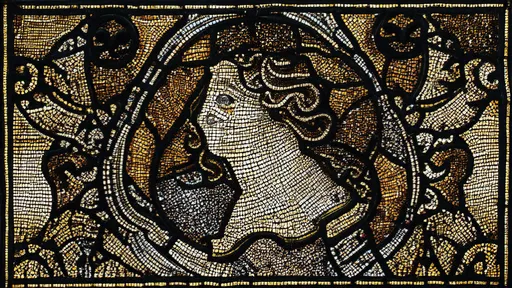
What truly sets this apart is the element of originality. These are not collages or mash-ups of existing work. The AI synthesizes the fundamental elements of design—line, form, color, rhythm—to create something genuinely new. It can produce patterns that blend Art Deco geometry with organic Japanese Edo-period influences, or generate fractal-based designs that echo natural forms but are entirely computational in origin. This ability to cross-pollinate styles and eras without direct human instruction is a testament to the creative potential embedded within these algorithms.
The implications for industries reliant on design are profound. In fashion, brands can now offer hyper-personalized products with unique patterns for individual customers, moving beyond mass production to mass customization. In interior design and architecture, AI can generate bespoke wallpapers, tiles, and textiles tailored to a specific space's aesthetic and functional requirements. The video game and film industries can use this technology to create vast, detailed virtual worlds with unique, algorithmically-generated textures and environments, enhancing realism and immersion.
Furthermore, this technology democratizes design. Small businesses and independent creators who previously lacked the resources to commission large volumes of original design work can now access a virtually infinite library of unique patterns. This levels the playing field, fostering innovation and diversity in markets that were once dominated by a few large players with extensive design departments.
However, this new frontier is not without its questions and challenges. The concept of authorship becomes blurred. If a pattern is generated by an algorithm trained on millions of human-created works, who is the true creator? Legal frameworks around intellectual property are struggling to keep pace with this technology. There are also concerns about cultural appropriation, as AI might generate patterns that draw deeply from specific cultural heritage without the context, understanding, or consent of the originating culture. Ensuring ethical data sourcing and respectful application of generated designs is a critical conversation that must accompany technological adoption.
Despite these challenges, the potential for positive impact is immense. AI-assisted design can serve as a powerful tool for preservation. By learning from patterns of endangered cultural traditions, AI can help generate new works that keep these styles alive and relevant for future generations. It can also be a source of inspiration for human designers, who can use these AI-generated starting points to refine, edit, and inject deeper meaning and intentionality, resulting in a powerful human-machine collaboration.
Looking ahead, the trajectory is clear. The ability to algorithmically generate millions of original patterns is more than a technical feat; it is a new medium for artistic expression. It challenges us to expand our definition of creativity and to reimagine the relationship between human intention and machine execution. As these tools become more integrated into creative workflows, they promise to unlock a new era of aesthetic exploration and innovation, where the only limit is not the ability to produce design, but the imagination to guide it.
The emergence of AI in pattern design marks a significant moment in the history of creativity. It is a testament to human ingenuity that we can build machines that not only compute but also create, offering a glimpse into a future where technology and art are seamlessly intertwined to enrich our visual world in ways we are only beginning to understand.
By /Aug 27, 2025
By /Aug 19, 2025
By /Aug 19, 2025

By /Aug 27, 2025

By /Aug 19, 2025

By /Aug 19, 2025
By /Aug 19, 2025
By /Aug 19, 2025

By /Aug 19, 2025

By /Aug 19, 2025
By /Aug 19, 2025

By /Aug 19, 2025
By /Aug 27, 2025

By /Aug 19, 2025
By /Aug 27, 2025
By /Aug 27, 2025

By /Aug 19, 2025
By /Aug 19, 2025
By /Aug 27, 2025
By /Aug 19, 2025
