The world of gemology and materials science has taken a significant leap forward with the introduction of a comprehensive ultraviolet-visible (UV-Vis) spectral database for diamonds. This groundbreaking resource, developed through years of meticulous research and collaboration among leading laboratories, promises to revolutionize the way diamonds are analyzed, authenticated, and utilized across multiple industries.
For decades, the study of diamond spectra has relied on fragmented datasets and limited reference materials. The new database consolidates thousands of spectral signatures from natural, synthetic, and treated diamonds, creating an unprecedented reference tool. What sets this collection apart is its inclusion of rare and unusual diamond types that were previously undocumented in systematic studies. Researchers can now access spectral patterns from Type IaB diamonds with complex nitrogen arrangements or compare them against the distinct signatures of high-pressure high-temperature (HPHT) treated stones.
The technological implications extend far beyond academic circles. Jewelry authentication services report that the database has already reduced analysis time by 40% while improving accuracy in detecting sophisticated treatments. One notable case involved a 5-carat fancy yellow diamond whose origin was contested between three different mines. The UV-Vis spectral fingerprint matched precisely with stones from the Kollur region in India, settling a months-long dispute among collectors and insurers.
Industrial applications are seeing equally transformative effects. Manufacturers of diamond-tipped cutting tools and optical components now utilize the spectral data to predict material performance under extreme conditions. A semiconductor company recently credited the database with helping them identify diamond substrates with ideal electronic properties for quantum computing applications, shaving nearly six months off their development timeline.
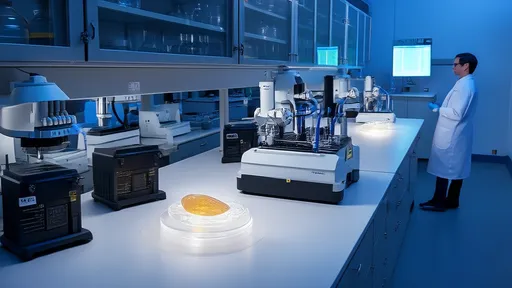
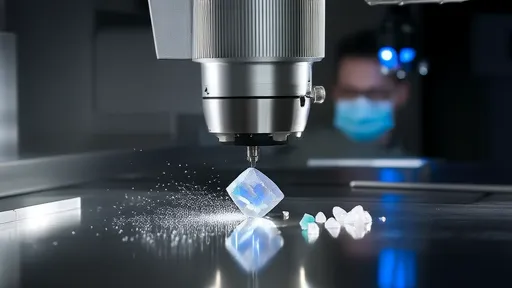
Behind the scenes, the compilation process involved cutting-edge instrumentation. Researchers employed high-resolution spectrophotometers with cryogenic capabilities to capture subtle spectral features that emerge at liquid nitrogen temperatures. Advanced machine learning algorithms then processed the raw data, identifying patterns invisible to traditional analysis methods. This dual approach of precision measurement and computational power has yielded insights into diamond formation processes that challenge several long-held geological theories.
Ethical considerations have been central to the project's development. The database includes metadata about each sample's provenance, ensuring researchers can account for potential geographic biases in the data. This transparency addresses growing concerns about conflict diamonds while providing gemologists with tools to verify ethical sourcing claims. Several government agencies have expressed interest in incorporating the database into their import/export verification protocols.
Looking ahead, the research team plans quarterly updates to incorporate new diamond varieties and expand the database's spectral range into the near-infrared region. A mobile application version is in development for field gemologists, and discussions are underway about creating similar resources for other colored gemstones. As the database gains adoption across industries, it stands to reshape not just how we study diamonds, but how we value and utilize one of nature's most extraordinary materials.
The launch coincides with renewed interest in diamond-based technologies, from biomedical sensors to next-generation laser systems. With this robust spectral library now available, researchers predict accelerated innovation in fields as diverse as quantum engineering and luxury goods authentication. The database doesn't just catalog what we know about diamonds—it illuminates pathways to discoveries we haven't yet imagined.
By /Aug 27, 2025
By /Aug 19, 2025
By /Aug 19, 2025

By /Aug 27, 2025

By /Aug 19, 2025

By /Aug 19, 2025
By /Aug 19, 2025
By /Aug 19, 2025

By /Aug 19, 2025

By /Aug 19, 2025
By /Aug 19, 2025

By /Aug 19, 2025
By /Aug 27, 2025

By /Aug 19, 2025
By /Aug 27, 2025

By /Aug 27, 2025

By /Aug 19, 2025

By /Aug 19, 2025

By /Aug 27, 2025
By /Aug 19, 2025
