Bearing Fluid Dynamics: Verification of Lubrication Theory for Rolling Steel Balls"

Aug 27, 2025 By

In the intricate world of mechanical engineering, the study of bearing fluid dynamics stands as a cornerstone for understanding and enhancing the performance of rotating machinery. A recent groundbreaking study, titled "Fluid Motion in Bearings: Experimental Validation of Lubrication Theory for Steel Ball Rolling," has provided profound insights into the complex interactions between rolling elements and lubricants within bearing systems. This research not only reaffirms long-standing theoretical models but also introduces nuanced observations that challenge and refine our comprehension of hydrodynamic and elastohydrodynamic lubrication regimes.

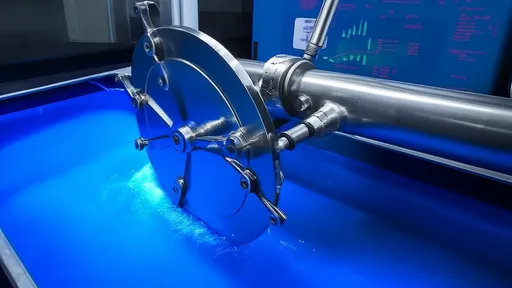
The research meticulously examines the behavior of lubricating fluids as steel balls roll between inner and outer races, a scenario fundamental to ball bearing operation. Utilizing advanced high-speed imaging and precision sensors, the team captured real-time data on fluid film formation, pressure distribution, and flow patterns under varying loads, speeds, and lubricant viscosities. Their experimental setup allowed for unprecedented visualization of the micro-scale fluid dynamics that occur in the narrow gaps of rolling contacts, where pressures can soar to extreme levels, significantly altering the lubricant's properties.

One of the most significant findings centers on the validation of classical Reynolds equation-based models for predicting film thickness in hydrodynamic lubrication. The experiments demonstrated remarkable agreement with theoretical predictions under moderate operating conditions, confirming the reliability of these models for engineering applications. However, under high-load and high-speed scenarios, the study observed deviations that highlight the limitations of assuming constant lubricant viscosity. The researchers documented instances where lubricant starvation or thermal effects led to thinner films than anticipated, emphasizing the need for more sophisticated, temperature-aware models in predictive maintenance and design.

Furthermore, the study delves into the transition zone between hydrodynamic and elastohydrodynamic lubrication (EHL), a critical region where both fluid dynamics and surface elasticity play pivotal roles. The team's data revealed how the lubricant's pressure-viscosity effect becomes dominant under these conditions, causing temporary solidification of the fluid and enabling the formation of ultra-thin but resilient films that prevent metal-to-metal contact. This phenomenon was captured with exceptional clarity, showing how the elastic deformation of the rolling elements and races works in concert with the lubricant to distribute loads and minimize wear.

Another compelling aspect of the research is its exploration of fluid motion within the bearing cavity itself. Beyond the contact zones, the study analyzed how lubricant circulates, churns, and potentially aerates, which can influence overall efficiency and heat generation. The researchers identified patterns of recirculation and vortex formation that contribute to energy losses and elevated operating temperatures. These insights are invaluable for designing next-generation bearings with optimized lubricant flow paths to reduce churning losses and improve thermal management.

The implications of this work extend far beyond academic interest. For industries reliant on high-performance machinery—such as aerospace, automotive, and energy—these findings offer a pathway to enhanced reliability and longevity of components. By validating and refining lubrication theories, engineers can develop more accurate predictive tools for bearing life, optimize lubricant selection, and implement maintenance strategies that preempt failures. The study also underscores the importance of considering real-world operating conditions, rather than relying solely on idealized models, when designing critical systems.

In addition to its technical contributions, the research methodology sets a new standard for experimental rigor in tribology. The integration of non-intrusive measurement techniques, such as laser-induced fluorescence and interferometry, provided data with minimal disturbance to the system being observed. This approach allowed for a more authentic representation of in-service conditions, capturing transient effects and nonlinear behaviors that are often smoothed over in simulations.

Looking ahead, the authors suggest several avenues for future work, including the investigation of novel lubricant formulations with nano-additives, the impact of surface textures on fluid retention, and the dynamics of hybrid bearings incorporating ceramic elements. They also advocate for the development of multiphysics models that couple fluid dynamics with thermal, structural, and even acoustic analyses to create a holistic understanding of bearing performance.

This study marks a significant milestone in the field, bridging theoretical elegance with practical relevance. It not only confirms the enduring value of foundational lubrication theories but also pushes the boundaries of our knowledge, revealing the subtle complexities that govern the behavior of fluids in motion within bearings. As machinery continues to evolve toward higher speeds, greater loads, and increased efficiency, such insights will be indispensable in driving innovation and ensuring operational excellence across countless applications.

Recommend Posts
Romance

Harmonic Vibration of Rocking Chair: Frequency Changes in Aging Wood Materials

By /Aug 27, 2025

In the quiet corners of antique shops and family homes, wooden rocking chairs hold more than just sentimental value—they carry within their grains a subtle acoustic record of material aging. Recent interdisciplinary research has revealed that the harmonic vibrations produced by these seemingly simple objects undergo measurable changes as the wood matures and deteriorates, creating what scientists are calling a "sonic fingerprint" of material decay.
Romance

Quantum Superposition Emotion: The Psychological Mapping of Schrödinger's Cat Paradox

By /Aug 27, 2025

In the quiet corners of theoretical physics and the bustling laboratories of psychological research, an unusual dialogue is emerging—one that bridges the abstract mathematics of quantum mechanics with the intimate complexities of human emotion. The catalyst for this interdisciplinary exploration is none other than one of science’s most famous thought experiments: Schrödinger’s Cat. Traditionally a parable about quantum superposition and observer effect, the paradox of the cat both dead and alive in a sealed box has begun to resonate in an unexpected domain—the study of the human psyche. Researchers are now probing whether the principles underlying this quantum conundrum might offer a metaphorical, or perhaps even mechanistic, framework for understanding emotional ambiguity, unresolved feelings, and the dualities that define so much of our inner lives.
Romance

Precision of Gear Engagement: The Mathematical Beauty of Involute Tooth Profiles

By /Aug 27, 2025

In the intricate world of mechanical engineering, few topics capture the elegance of precision like the meshing of gears, particularly those designed with involute tooth profiles. This mathematical marvel, often overshadowed by more flashy technological advancements, remains a cornerstone of modern machinery, from humble wristwatches to colossal industrial equipment. The story of involute gearing is not merely one of mechanical function but a testament to how mathematical principles can be harnessed to create harmony in motion.
Romance

The Paradox of Double-Slit Interference: Mechanism of the Impact of Observation on Outcomes

By /Aug 27, 2025

The double-slit experiment stands as one of the most profound and enigmatic demonstrations in the history of physics. Initially conceived by Thomas Young in the early 19th century to demonstrate the wave nature of light, it has evolved, particularly through its quantum mechanical interpretation, into a cornerstone of modern physics that challenges our very understanding of reality. At its heart, the experiment is elegantly simple: a beam of particles, be they photons or electrons, is directed towards a barrier with two narrow, parallel slits. A screen behind this barrier records the pattern of where these particles land.
Romance

Lunar Orbit Encoding: Celestial Motion Simulation of Lattice Projection

By /Aug 27, 2025

In the quiet expanse of celestial mechanics, a groundbreaking study has emerged that redefines our understanding of lunar motion through an intricate lens—literally. Titled Lunar Orbit Coding: Celestial Motion Simulation via Window Lattice Projection, this research marries ancient architectural principles with cutting-edge computational astronomy to model the Moon’s path with unprecedented clarity. Spearheaded by a multidisciplinary team at the Institute for Advanced Spatial Studies, the project utilizes the geometric patterns of traditional window lattices—common in East Asian and Gothic architecture—as analog frameworks for simulating orbital dynamics. The core idea is as elegant as it is innovative: by mapping the Moon’s trajectory onto these fixed lattice patterns, researchers can decode complex gravitational interactions and perturbations in the Earth-Moon system through projective geometry.
Romance

Bearing Fluid Dynamics: Verification of Lubrication Theory for Rolling Steel Balls"

By /Aug 27, 2025

In the intricate world of mechanical engineering, the study of bearing fluid dynamics stands as a cornerstone for understanding and enhancing the performance of rotating machinery. A recent groundbreaking study, titled "Fluid Motion in Bearings: Experimental Validation of Lubrication Theory for Steel Ball Rolling," has provided profound insights into the complex interactions between rolling elements and lubricants within bearing systems. This research not only reaffirms long-standing theoretical models but also introduces nuanced observations that challenge and refine our comprehension of hydrodynamic and elastohydrodynamic lubrication regimes.
Romance

Hysteresis Loop Memory: An Emotional Storage Model of Ferromagnetic Materials

By /Aug 27, 2025

In a groundbreaking interdisciplinary study, researchers have proposed a novel conceptual framework that draws a compelling parallel between the magnetic hysteresis loops observed in ferromagnetic materials and the mechanisms of human emotional memory. The paper, provocatively titled "Hysteresis Loop Memory: An Emotional Storage Model in Ferromagnetic Materials," suggests that the way these materials retain a memory of an applied magnetic field mirrors how the human psyche stores and recalls emotional experiences. This is not merely a metaphorical comparison but a rigorous attempt to model psychological processes using well-established physical principles, opening new avenues for both materials science and cognitive psychology.
Romance

Steam Valve Control: The Automated Equation for Pressure Regulation

By /Aug 27, 2025

In the heart of industrial operations, where steam powers everything from electricity generation to manufacturing processes, the precise control of steam valves stands as a critical determinant of efficiency and safety. The evolution from manual adjustments to sophisticated automated systems represents not merely a technological shift but a fundamental rethinking of how we manage energy. The automation of steam valve control, particularly for pressure regulation, is governed by a complex interplay of engineering principles, algorithmic precision, and real-time data analytics, forming what can be termed the Automated Equation for Pressure Regulation. This equation is not a single formula but a dynamic framework integrating hardware, software, and control theory to achieve stability in the most demanding environments.
Romance

Mechanics of Flying Buttress Structures: The Invisible Support System of Gothic Architecture"

By /Aug 27, 2025

The soaring cathedrals of the Gothic era stand as testaments to an architectural revolution, one defined not merely by aesthetic ambition but by a profound and hidden structural ingenuity. While the pointed arches, ribbed vaults, and vast expanses of stained glass capture the eye and the imagination, it is an unseen hero, the flying buttress, that truly enabled these stone behemoths to defy gravity and reach for the heavens. This externalized skeletal system represents one of history's most brilliant feats of structural engineering, a solution born from necessity that forever changed the landscape of European architecture.
Romance

Aesthetics in Hearing Aid Acoustics: Emotion Preservation in Digital Signal Processing

By /Aug 27, 2025

In the evolving landscape of audiological technology, the conversation has shifted from merely amplifying sound to preserving the essence of human hearing. The paper Acoustics of Hearing Aids: Emotional Retention in Digital Signal Processing delves into this nuanced frontier, exploring how modern devices can maintain the emotional integrity of sound while providing clarity. For decades, hearing aids were criticized for making the world sound robotic or sterile, stripping away the warmth of a loved one's voice or the joy in a musical melody. This research marks a pivotal step toward reconciling technical precision with the rich, emotional tapestry of human auditory experience.
Romance

Superconducting Suspension Embrace: The Zero Resistance Metaphor of the Meissner Effect

By /Aug 27, 2025

In the quiet hum of a laboratory, a small disc of ceramic material hovers effortlessly above a magnet, defying gravity with an almost supernatural grace. This is not magic, but one of the most profound demonstrations of quantum mechanics made visible: the Meissner effect. When certain materials are cooled to extremely low temperatures, they transition into a superconducting state, expelling magnetic fields from their interior and allowing them to levitate above magnets without any physical contact. It’s a phenomenon that has captivated physicists and engineers for nearly a century, not just for its visual splendor but for the revolutionary promise it holds.
Romance

Brownian Motion Love: A Probabilistic Analysis of Pollen's Random Walk

By /Aug 27, 2025

In the quiet corners of spring, where blossoms burst and pollen drifts on the breeze, a curious parallel emerges between the randomness of nature and the unpredictability of human emotion. The study of Brownian motion, first observed by botanist Robert Brown in 1827 as he watched pollen grains jitter erratically in water, has long fascinated scientists. But what if this same principle—this random walk through space—could shed light on the meandering paths of love? A groundbreaking interdisciplinary paper titled Brownian Motion of Love: A Probabilistic Analysis of Pollen’s Random Walk explores this very idea, weaving together physics, biology, and the poetry of human connection.
Romance

Rail Vibration Harmonics: Suppression and Utilization of Rail Resonant Frequencies

By /Aug 27, 2025

In the intricate world of railway engineering, the phenomenon of rail vibration harmonics presents both a formidable challenge and a tantalizing opportunity. The resonant frequencies inherent in steel rails, if left unmanaged, can lead to accelerated wear, noise pollution, and even structural failures. Yet, when properly understood and harnessed, these same vibrations hold the potential to enhance monitoring systems, improve safety protocols, and even contribute to energy harvesting initiatives. This dual nature of rail vibrations—as both a destructive force and a beneficial resource—forms the core of contemporary research and development efforts across the globe.
Romance

Hydrodynamic of Ship Rudder: Relationship Between Rudder Angle of Attack and Steering Efficiency

By /Aug 27, 2025

In the intricate world of naval architecture and marine engineering, the study of rudder hydrodynamics stands as a critical pillar for understanding vessel maneuverability. The relationship between the angle of attack of a rudder blade and its steering efficiency is not merely an academic exercise; it is a fundamental principle that dictates the performance, safety, and economic viability of maritime transportation. This deep dive explores the nuanced interplay between these forces, shedding light on the physics that govern a ship's path through water.
Romance

Elevator Counterweight Balance: The Manifestation of Energy Conservation in Mechanical Systems

By /Aug 27, 2025

In the intricate dance of mechanical systems, few principles are as fundamental and pervasive as the conservation of energy. This immutable law, which states that energy cannot be created or destroyed but only transformed or transferred, finds a particularly elegant and practical manifestation in the operation of modern elevators. The seemingly simple act of an elevator car ascending and descending is, in fact, a masterclass in applied physics, with the counterweight system serving as its star pupil. This sophisticated balancing act is not merely a matter of convenience; it is a critical engineering solution that directly dictates the system's efficiency, safety, and operational cost.
Romance

Tree Rings and Climate: Environmental Archives of Woody Cell Growth

By /Aug 27, 2025

In the quiet stillness of a forest, the rings of a tree hold more than just the story of its own life. They are, in fact, a meticulously kept archive of the environment, a natural ledger of climate history written in the language of wood. The scientific discipline of dendroclimatology deciphers this language, transforming the seemingly simple growth patterns of trees into a powerful tool for understanding past climates. By studying the width, density, and chemical composition of annual rings, researchers can reconstruct temperature fluctuations, precipitation patterns, and even atmospheric conditions from centuries, and in some cases, millennia ago. This field stands at the fascinating intersection of biology, ecology, and climatology, offering a unique and deeply historical perspective on environmental change that is crucial for contextualizing our current climate crisis.
Romance

Wing Vortex Dynamics: The Principle of Airflow Generating White Lines

By /Aug 27, 2025

The phenomenon of white lines trailing behind aircraft wings, often visible under specific atmospheric conditions, represents one of the most visually striking manifestations of fluid dynamics in action. These condensation trails, or contrails, are not merely aesthetic curiosities but serve as visible signatures of complex aerodynamic interactions occurring at the wing surfaces. The generation of these patterns involves intricate relationships between pressure differentials, temperature gradients, and humidity levels that reveal fundamental principles of vortex dynamics and atmospheric physics.
Romance

Metamorphic History of Strata: Mineral Recrystallization Induced by Plate Tectonics

By /Aug 27, 2025

The Earth's crust is a dynamic archive, its rocky layers holding secrets of planetary transformation written in mineralogical code. Few processes capture this geological drama as profoundly as metamorphism—the profound alteration of rocks under the immense pressures and searing temperatures generated by the relentless dance of tectonic plates. It is a story not of melting, but of solid-state rebirth, where existing minerals become unstable and recrystallize into new, denser assemblages, creating a permanent record of the titanic forces that shaped them.
Romance

Nautilus Logarithmic Spiral: Calcium Carbonate Deposition of the Golden Ratio"

By /Aug 27, 2025

In the intricate dance of nature's architecture, few patterns captivate the scientific and artistic imagination quite like the logarithmic spiral. This elegant curve, often associated with the golden ratio, appears in phenomena ranging from galaxies to hurricanes, and now, remarkably, in the humble shells of mollusks. Recent research has unveiled a fascinating connection between the formation of these shells and the deposition of calcium carbonate, governed by the mathematical precision of the logarithmic spiral and the divine proportion of phi.
Romance

Welding Metal Art: Observation of Crystal Growth in Solidification of Molten Pool"

By /Aug 27, 2025

In the quiet hum of the welding studio, where sparks dance like fireflies and molten metal glows with the warmth of a miniature sun, a profound transformation is taking place. It is here, at the intersection of intense heat and human creativity, that the field of welding metal art transcends its industrial roots to become a medium for breathtaking artistic expression. The recent focus within this community, however, has shifted from the macro to the micro, from the grand sweep of a sculpted curve to the intricate, hidden world of crystal growth within the weld pool. This deep dive into metallurgy is not just for scientists; it is providing artists with an unprecedented lexicon of visual texture and structural integrity, fundamentally changing how they work with metal.